


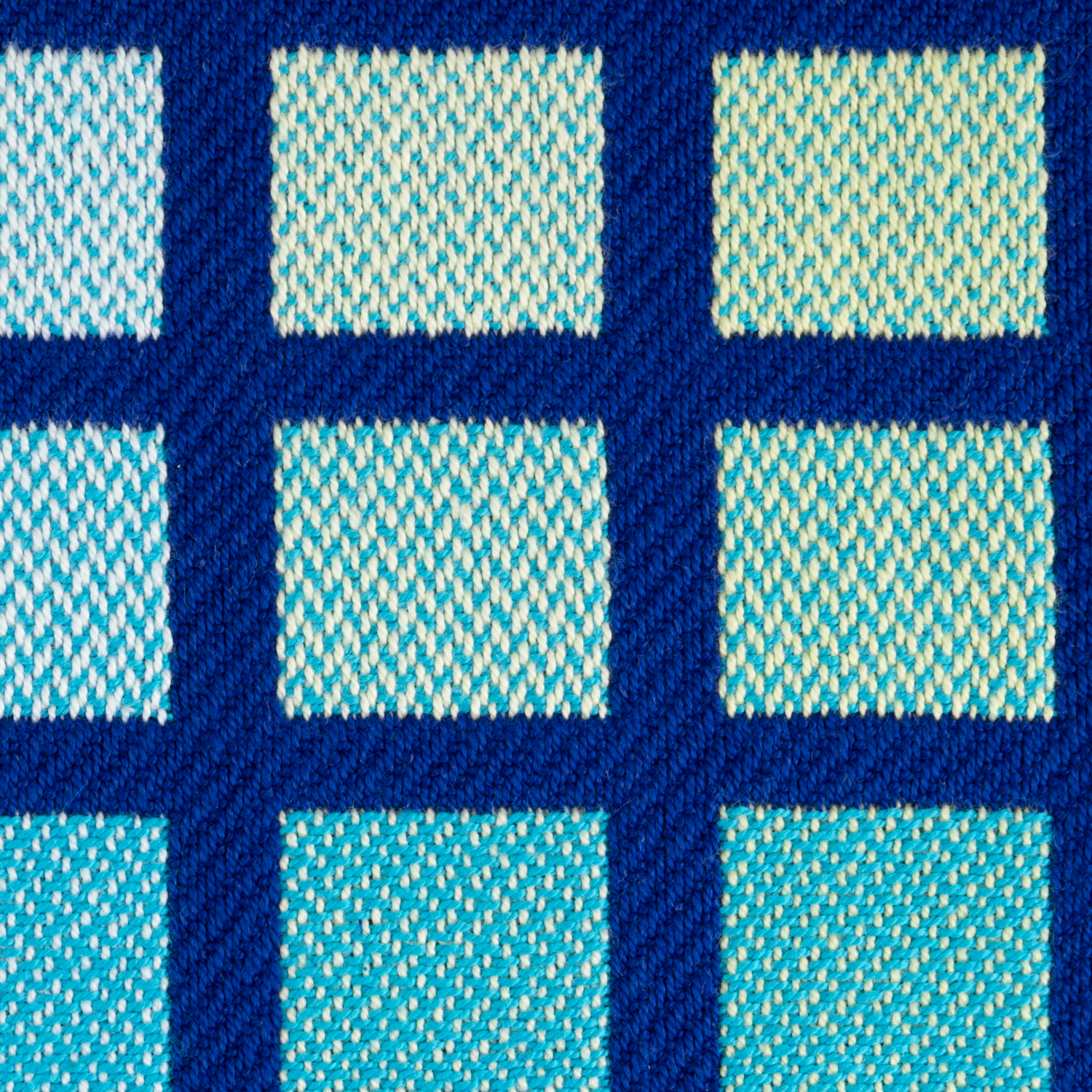
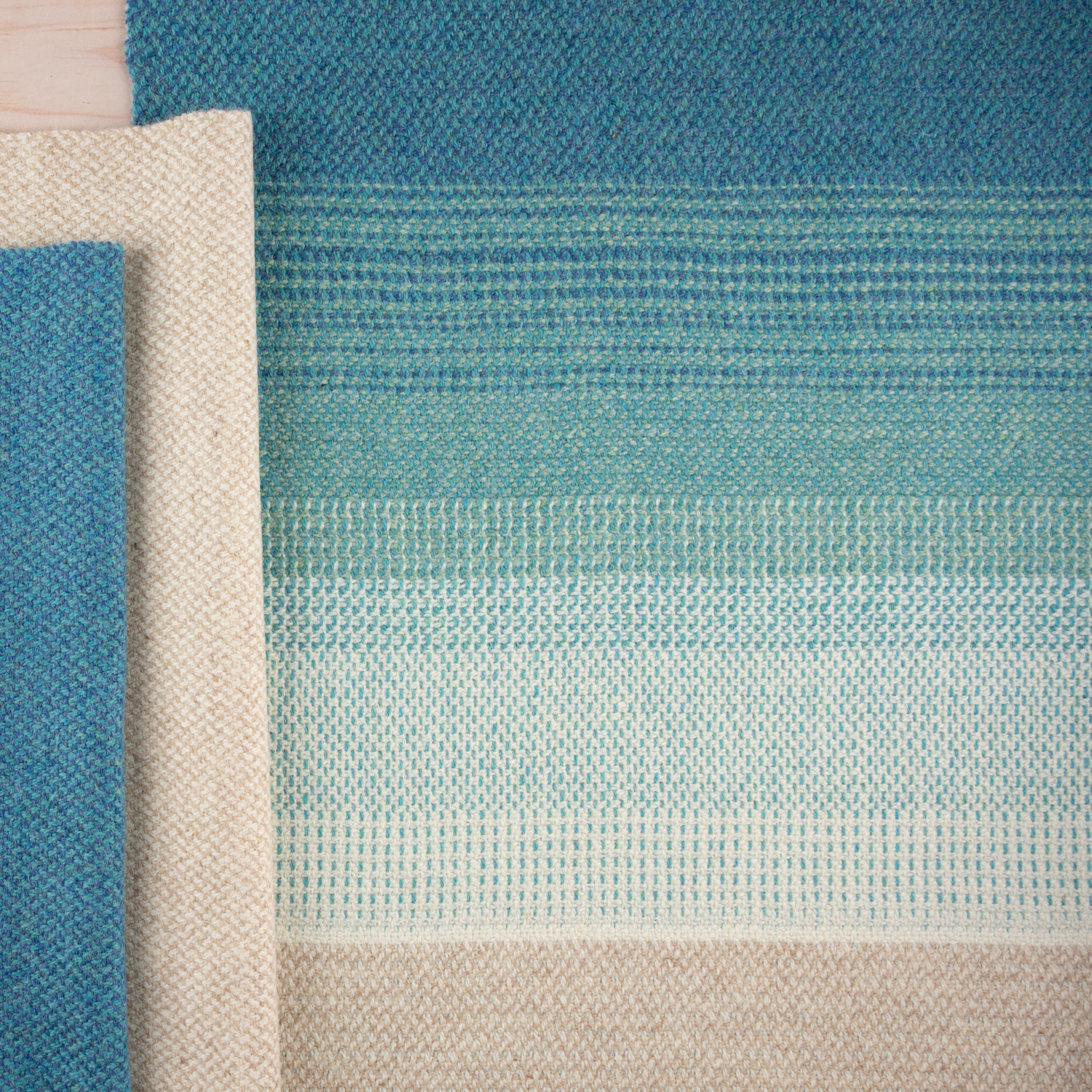

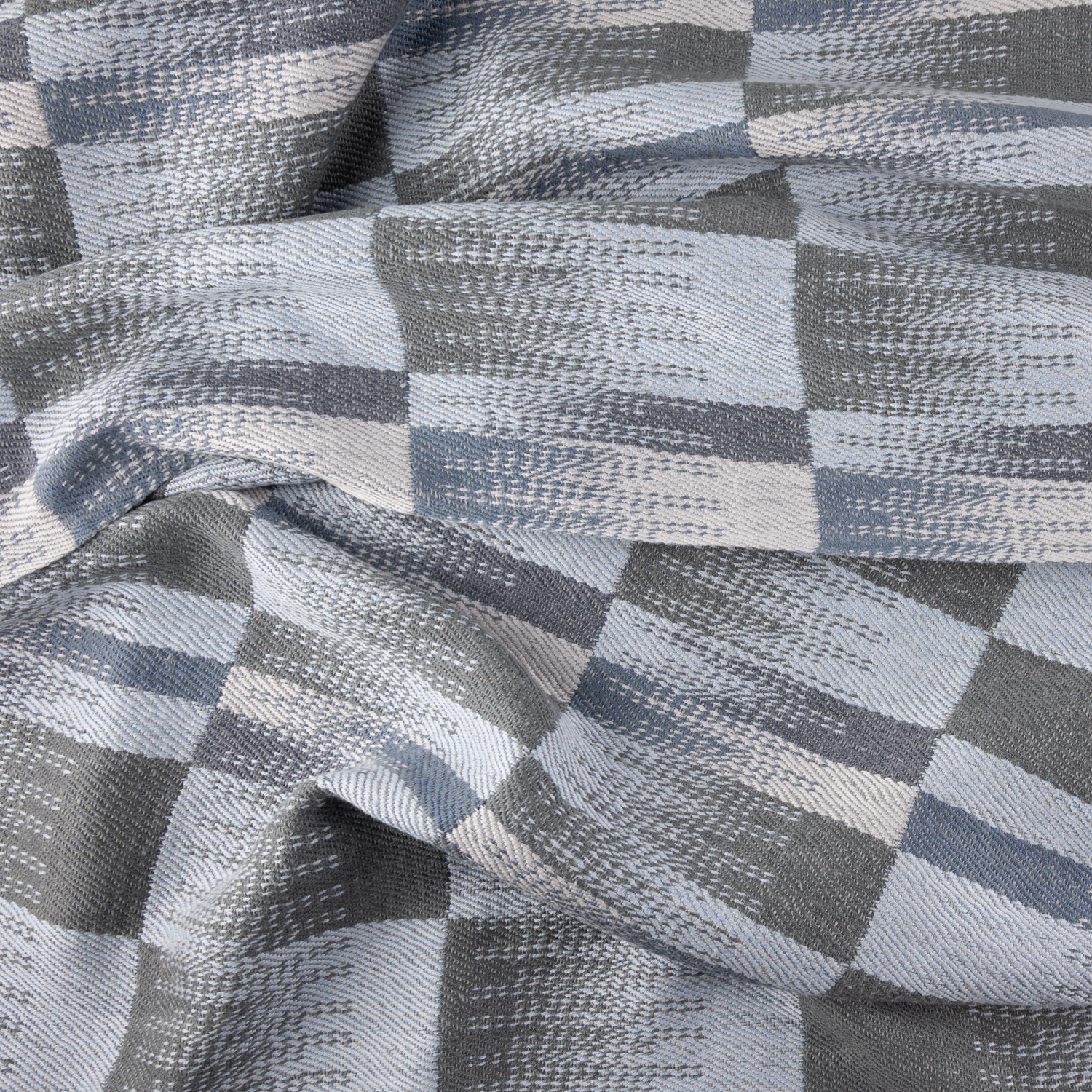
I am using the phrase double twill to refer to a double cloth in which both layers are (or can be) woven as twill. I use that little qualification ‘can be’ because sometimes we might mix our structures up a little!

Mixing structures in a twill-based double cloth
You may have seen my blog or even my digital resource pack on double-faced twill and be wondering whether this is more of the same. It is not the same.
Double-faced twill is a structure with three elements: one warp and two wefts.
Double twill is a structure with four elements: two warps and two wefts. I’ve got a blog post about this too.
 Double twill: two warps and two wefts
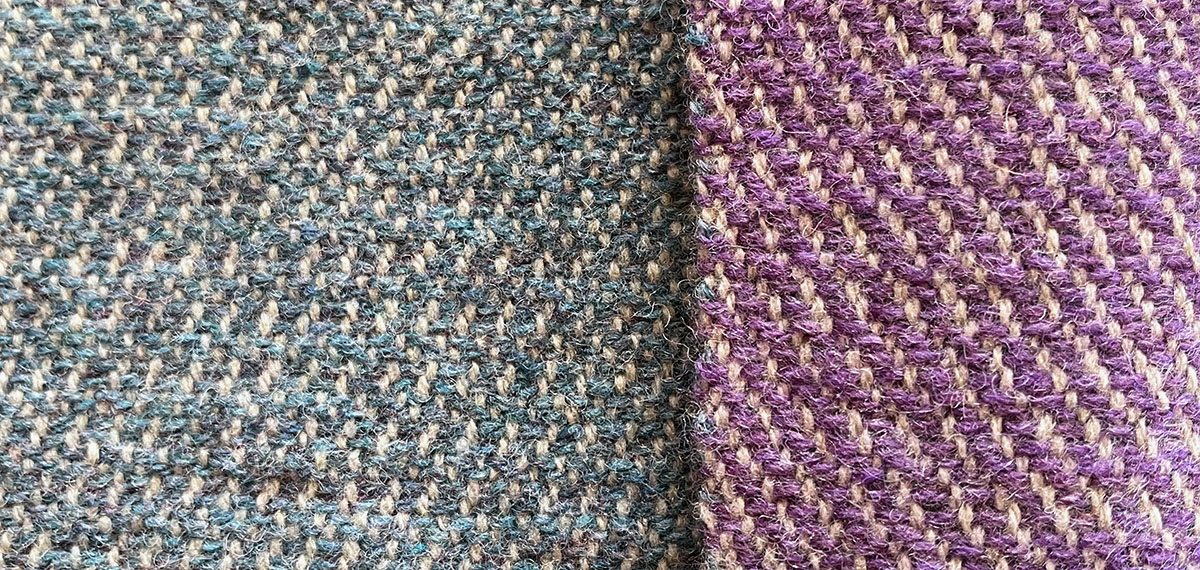 Double-faced twill: one warp and two wefts
The first presentation of Adventures in Double Twill will open for priority booking on 1 November. To get your email invitation with the secret booking link, sign up to the waiting list.
The course will last for six weeks from 9 February to 23 March 2027. We will start the workshop with our looms fully warped up, so I will provide all the instruction you need for that ahead of time. I plan to offer an additional (optional) Zoom class in January for those who want extra guidance or support in planning the warp and setting up.
You will need a minimum of 8 shafts and (if using a floor loom with treadles) 10 treadles.
While you can create double twill on any kind of 8 shaft loom, I recommend using a table loom if you have access to one. A dobby loom (mechanical or computer dobby) will work well too. The next best option would be a jack loom, with either a rising or a sinking shed and a minimum of 10 treadles, but you will have less flexibility for mixing and matching design elements.
If you have a countermarche loom then it will be a challenge to do all the sampling we have in store, so it’s not suitable for the workshop. Although you will be able to weave double twill on your loom later, borrowing a table loom for the workshop itself will make it much easier to experiment.
If you haven’t done any double weave at all, then a better workshop to start with would be Understand Double Weave on 8 Shafts.
If you can weave twill with it, you can weave double twill with it. My personal preference is to use wool as double twill is wonderful for cushions, blankets, scarves etc and I like those things in wool. However, the best yarn for you to use will be one that you enjoying working with.
Yes, you will. All the core teaching materials will be pre-recorded and available to you at any time. Each lesson is broken down into a series of short videos, with slides and transcripts you can print out for reference, as well as downloadable worksheets and examples. There is also a community forum where you can ask questions at any time. The live classes will be scheduled to try and accommodate as many different time zones as possible, but if you cannot manage any of those times then you will still have all you need to be able to weave.
You will have access to the real me. I’m recording the core teaching materials because this makes them available to everyone at any time. However, I will also be hosting live online sessions every week, and I will always be accessible via the community forum as well.
Live sessions are held at two or three alternative times each week, to offer as much flexibility as possible across time zones. Typical times are 10:30, 17:00 and 19:30 in the UK. You can select any of these as your preferred time to attend, but don’t need to stick to the same time each week. To check what they will be in your time zone I recommended this converter.
There’s no expiry date, so you can continue to access the course materials for as long as you like*. It’s my intention that this workshop should spark your interest in this rich and varied structure, and I hope you’ll come back and access the materials whenever you need a reminder or want to try something new.
* As with any technology, of course, this is subject to the life of the platforms where they are hosted. If for any reason that becomes an issue, I will give you as much notice as I can.
That’s my intention! I am really enthusiastic about all kinds of double cloth, and I want to keep spreading that enthusiasm. If you’d like to make sure you hear about future class dates, you can add your name to the waiting list.
If you haven’t done any double weave before, then this course is unlikely to be the best choice. If you are confident in dressing your loom, can read a draft, and have woven with more than one structure, e.g. plain weave and twills, have a look at Understand Double Weave on 8 Shafts instead.
No! I know there are some great weaving groups on Facebook, but I am not a fan of the Facebook environment, which I find noisy and confusing. I’ve chosen Circle as the platform where I host the private community for Weaving Space Online so that we have a quiet space to focus on weaving. If you haven’t used it before, don’t worry – I’ll help you get started.