

Double Cloth Decisions
Double Cloth Decisions is a series of posts which goes behind the scenes of my book Designing and Weaving Double Cloth. In these posts I examine some of the decisions I had to make about the content, structure and presentation, because there isn’t just One Right Way to do double cloth!
I’ve already published a few blog posts about double weave threadings, and it’s also a topic I discuss in the book, but here I am again with – apparently – more to say! In this post I am going to share my own personal experiences and preferences, which are varied and may be entirely different from yours.
And that is OK. It may be a spoiler, but the answer to the question “which threading is best for double weave?” is very simple: “it depends”. It depends on you and on me, on our looms, our design preferences and our weaving projects.
The candidates
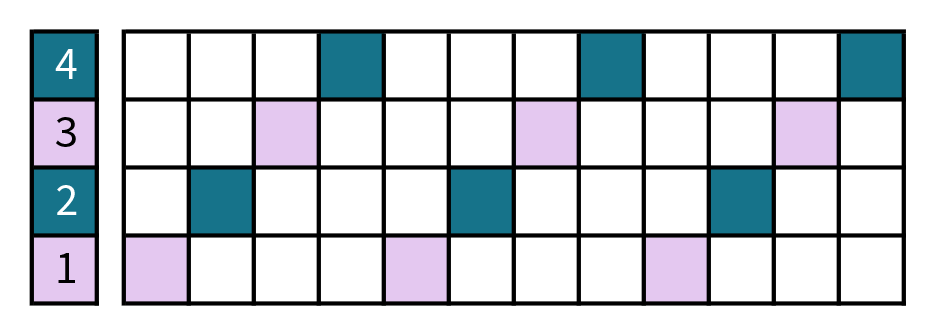
In my post on threading for four-shaft double cloth, I share two basic options: the straight threading and the divided parallel threading.

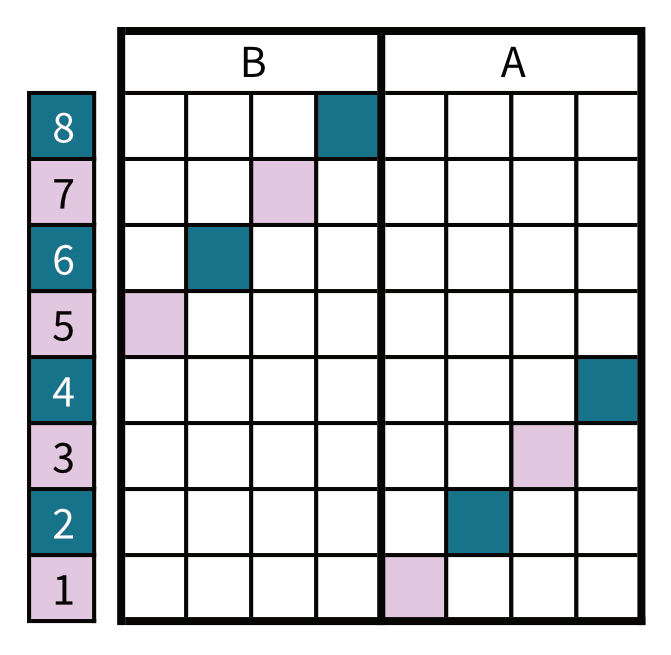
In my post on threading for two blocks on eight shafts, I consider both options again.
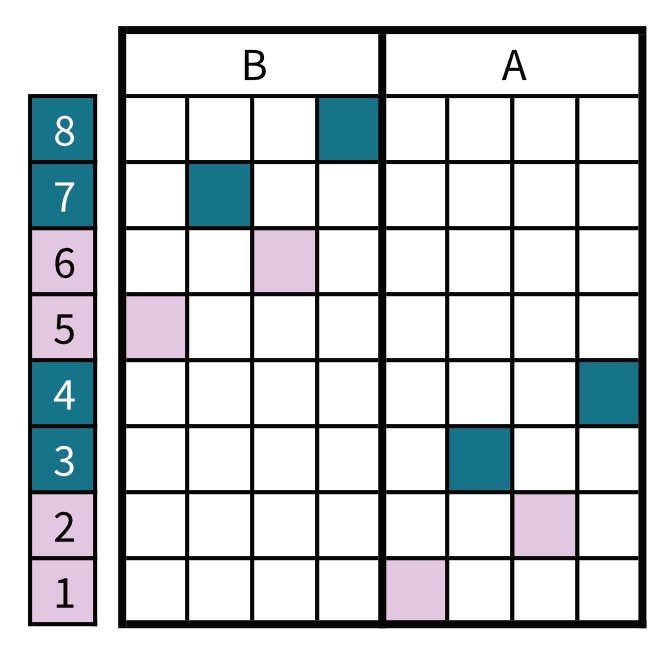
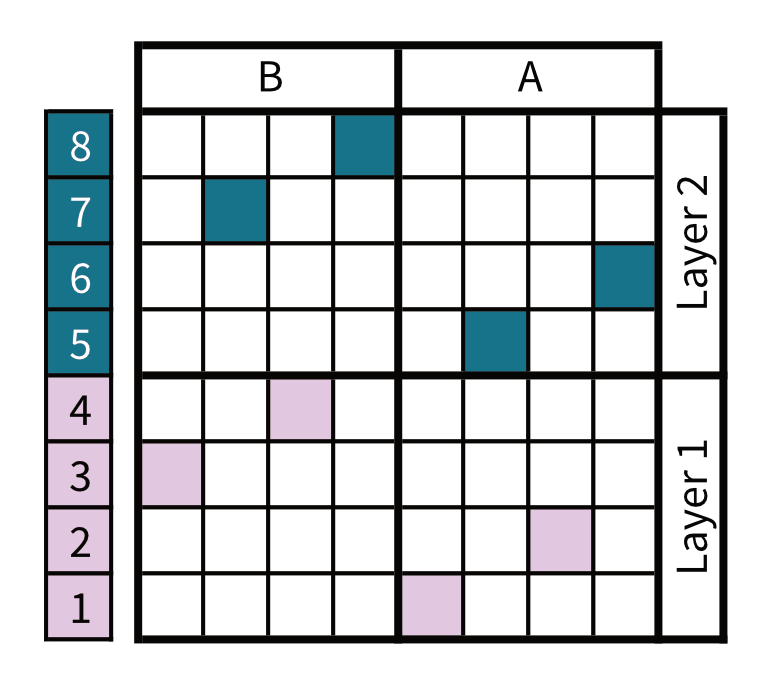
And I also introduce a third option, which prioritises the layers over the blocks:
Finally (for now!) I have also blogged about using a point-based threading in connection with designing in Fiberworks Sketchpad, and the first video in that post covers the transformation from straight to parallel and vice versa. I am not going to review all the details of these threadings here, because you can find that material in those earlier posts.
The considerations
If we want to choose between these approaches, we need to know what we are selecting for. That is, we need to identify the properties they have so that we can decide whether we want to prioritise those properties or not. We could slice and dice this in many different ways, but the main properties that stand out to me can be summarised as ease and flexibility.
Ease
When I think about ease, I am chiefly thinking about what is happening – or is about to happen – right now on my loom. That could include
- How easy will this threading be to accomplish? Will it introduce more risk of error than I am happy with? Will it be easy to check and correct if necessary?
- How easy will the corresponding tie-up be? If I want to change the tie-up, will that be straightforward? Will the treadling be easy to remember or to work out as I go?
- How easy will it be to work with on a table loom? Will I be able to remember the lifts or to work them out if I get lost?
- How easy will it be to construct a liftplan for a computer dobby? Will I be able to do this easily my weaving software or using some other tool?
Right away, we can see that ‘ease’ may mean different things for different weavers, or even for the same weaver at different times using different looms.
Flexibility
When I think about flexibility, I am chiefly thinking about extending or adapting the basics, so to some extent it is just a super-charged version of ease. How easily can I take this starting point and develop it to do something more complex? That ‘something more complex’ may be something I want to do in the next couple of hours – or it may be something I am working towards in the next couple of months or years. Depending on my interests and ambitions, it could include asking
- Will I be able to adapt these lifts to create different interlacements on the fly?
- Will I be able to extend this approach from 8 shafts to 12 or 16 or more?
- Will I be able to extend this approach from two layers to three or four layers or more?
- Will I be able to apply this approach to a different kind of threading, such one where the yarns are different thicknesses or one based on points or on a network?
And like ease, flexibility shows itself to have many possible facets. The important thing is not to try to optimise for everything at once, but to prioritise the things that matter to you.
Some conclusions
For that reason, I cannot possibly come to one conclusion about the best approach to threading for double cloth, but I can share some of the conclusions I have come to in my own weaving.
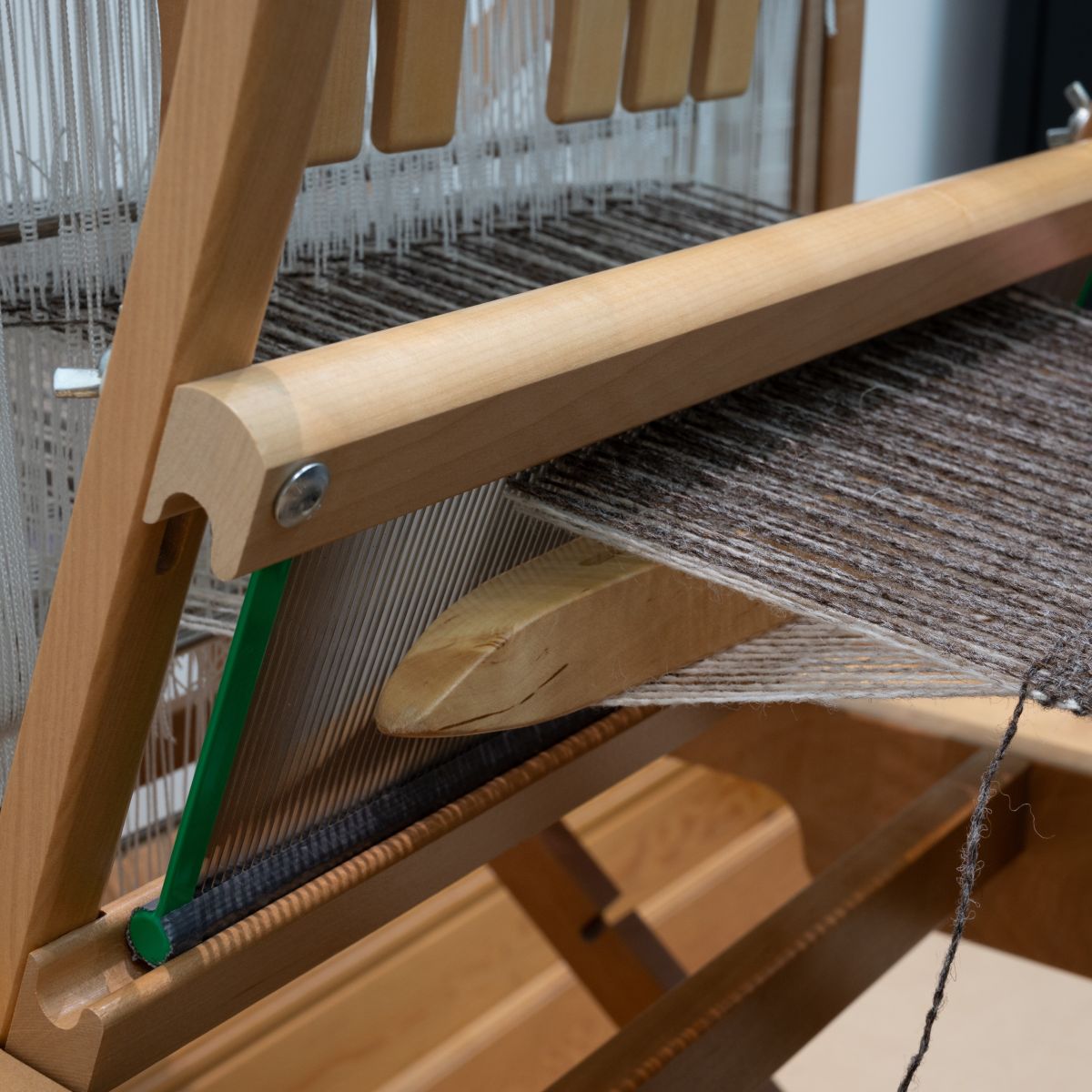
When I am weaving on a table loom
In this scenario the largest number of shafts I am concerned with is eight, so I am not going to have to juggle many blocks. My biggest priority is that the lifts should be easy to identify and adapt. This leads me to prefer the divided parallel threading as the weaving rhythm of odds first then evens is super easy to keep track of – my weaving brain basically does that job on autopilot now – and because it is a memorable pattern, I can also adapt it easily to mix up my layers with more structural variations.
And speaking of layers, I also prefer to prioritise the layers over the blocks in my threading on the table loom. Having front-facing levers on my looms means that I have a clear visual demarcation: the leftmost four levers manage one layer, the rightmost four levers manage the other. Job done!
When I am weaving on a floor loom
Actually, I have the same preference here as well, although levers obviously don’t come into it. In fact, I no longer have a floor loom with treadles, but for a long time I wove on a countermarche with eight shafts. As the most economical option for double weave is a skeleton tie-up – and for eight shafts, that would ideally be a 12-treadle tie-up on a countermarche loom – that means there are three options for every shaft: tie it to go up, tie it to go down, leave it untied. In this context, I find it easier to make the tie-up correctly if layers are prioritised.
The odd/even lifting pattern is not an issue once your treadles are prepared, but the divided parallel threading is much easier to adapt to give priority to layers rather than blocks, and hence that would be my choice.
When I am weaving on a computer dobby loom
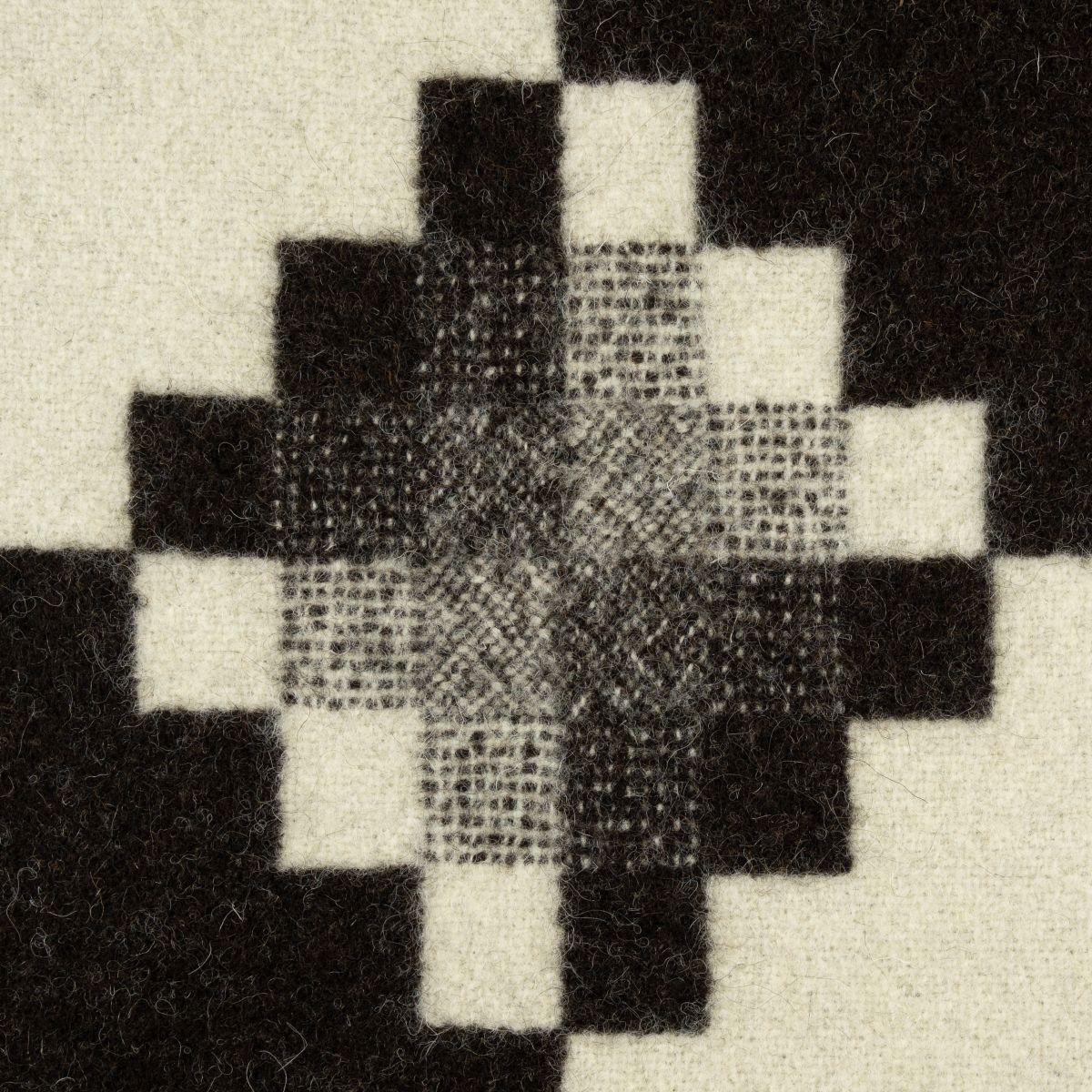
In this case, I would usually depart from my divided parallel layers completely, and favour a straight threading, whatever the basis of my design. There are two reasons for my choice. One is simply that my computer loom is deep and my arms not that long, so I really have to reach to thread the last four shafts. When I am threading at the very tips of my fingers and threading hook, it is much easier to thread in a straight draw than anything else.
But more generally, it is also much easier to construct complex liftplans on the basis of a straight threading, as I discuss in the first video in my Sketchpad post (and, as it happens, in chapter three of Designing and Weaving Double Cloth), so the straight threading simplifies the whole design process. This would be true, too, if I were working on paper rather than with weaving software.
When I am weaving more than two layers
However, I would make an exception for projects where the complexity comes from more layers rather than (for instance) more blocks.
The photo on the right shows a small linen vessel woven as a double tube. In brief, on eight shafts a project like this can be woven using four layers which are joined together into two tubes, one inside the other.
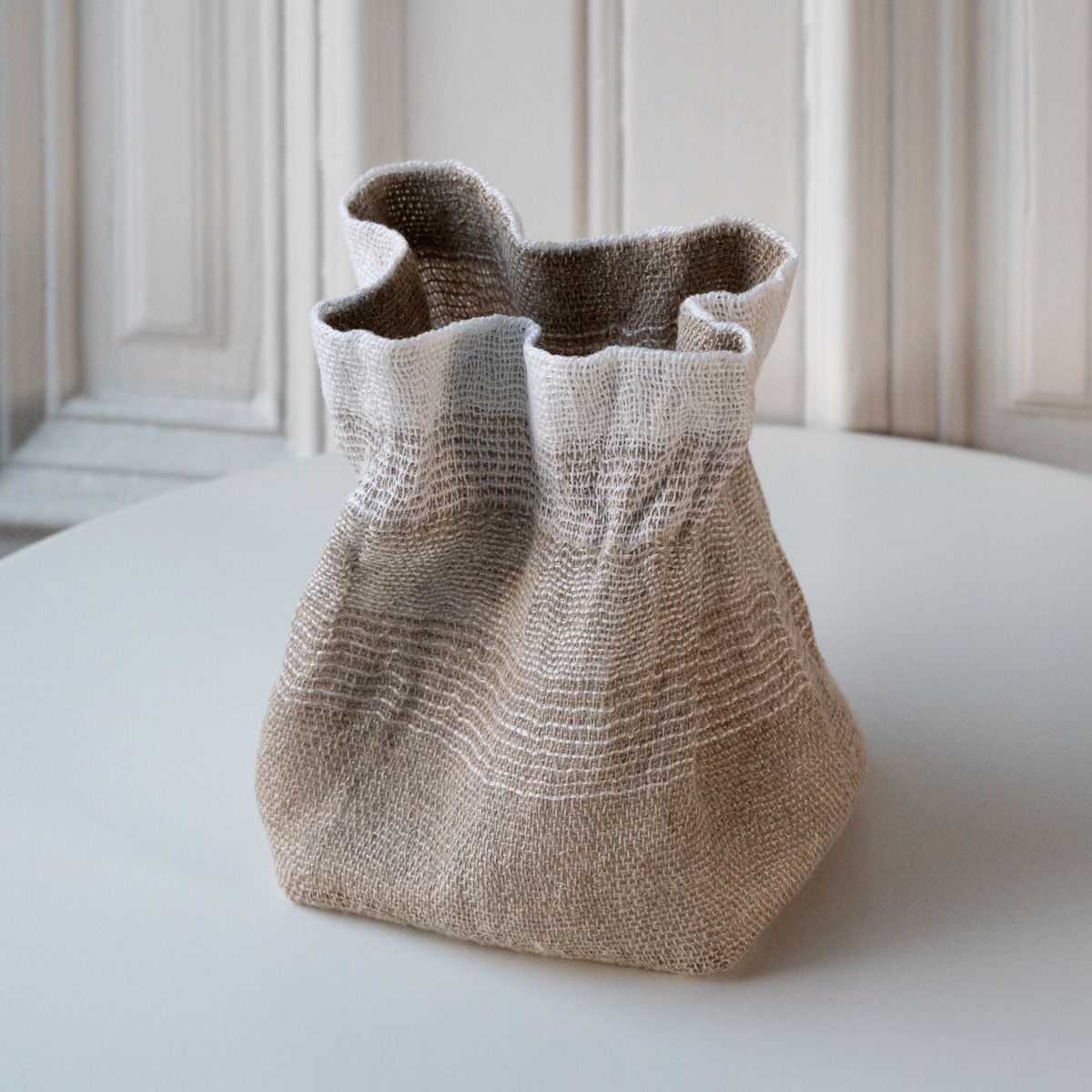
When setting up and working with multiple layers, I find it much easier to keep track when each layer is assigned to an adjacent pair of shafts, e.g. shafts 1 & 2 for the first layer, shafts 3 & 4 for the second and so on. I have described how I would think through a similar structure in this blog post.
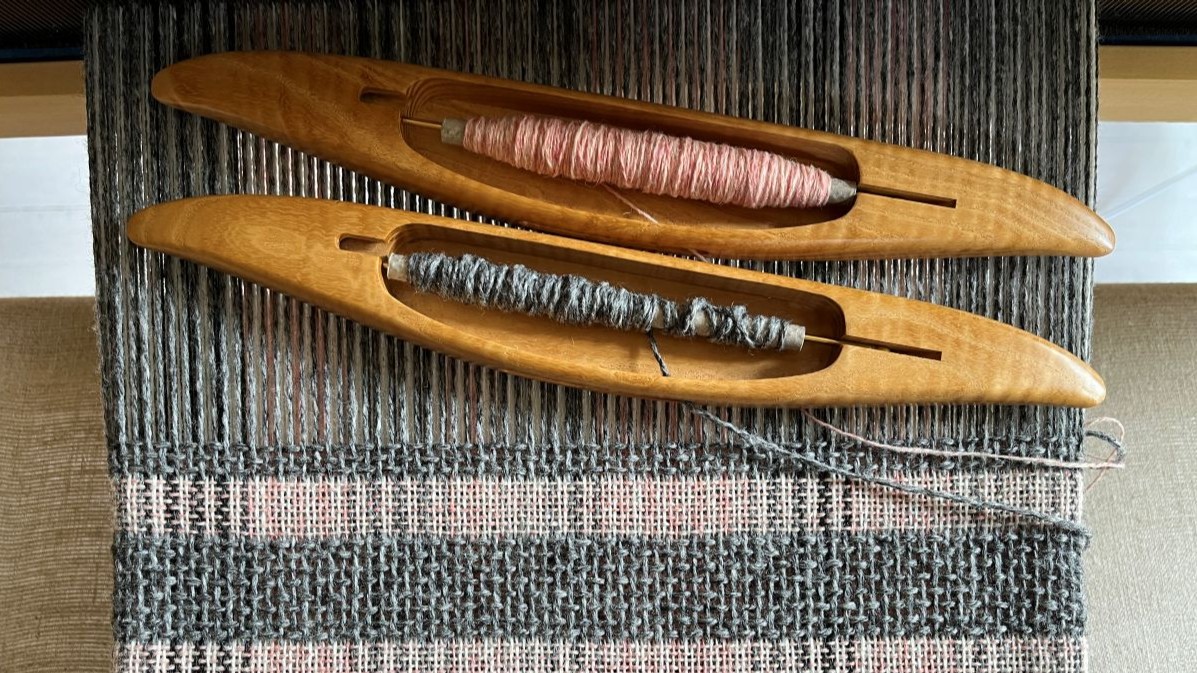
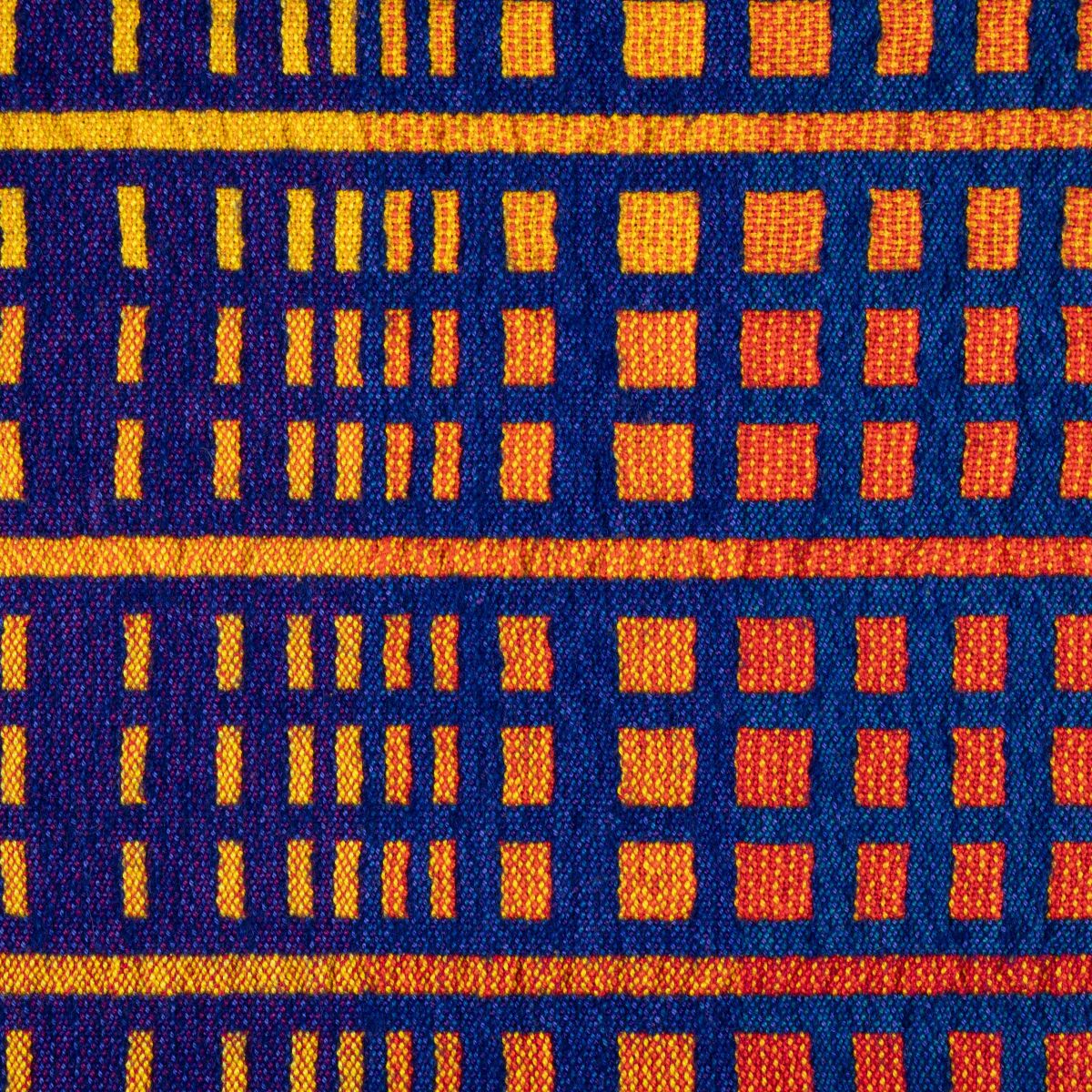
My preference is even stronger when the yarns are different thicknesses, and the threading is no longer in a one-to-one ratio, as in the photo right at the top of this post.
As you can see, when I say “it depends” I really mean it! I find that different approaches suit different looms, different aims, different projects, and what I really value here is the flexibility of double cloth and the option to choose my threading to suit my context. After all, any shaft can serve in any position, as long as I adjust my tying up or lifting to match. That’s a topic for another post, but I hope this one will encourage you to think about your preferences and make the choices that suit you best.
First posted on weavingspace.co.uk © Cally Booker